Okay, so here’s the deal – did you know that the cloud gaming market is expected to hit over $20 billion by 2030? That’s insane! I remember when I first heard about cloud gaming like five years ago, and honestly, I thought it was just another tech gimmick that would fizzle out. Boy, was I wrong.
The future of cloud gaming isn’t just coming – it’s practically here, knocking on our door with a massive smile. And trust me, after spending way too many hours testing different platforms (my wife wasn’t thrilled about that), I’ve got some thoughts to share.
My Rocky Start with Cloud Gaming
Let me tell you about my first cloud gaming disaster. I signed up for a service back in 2019, super excited to play the latest AAA titles without dropping $500 on a console. The lag was horrible! I’m talking like trying to drive a car with a two-second delay between turning the wheel and the car actually turning. It was frustrating as heck, and I almost gave up completely.
But here’s where it gets interesting. Fast forward to 2024, and the technology has improved so much it’s basically unrecognizable. Services like NVIDIA GeForce NOW and Xbox Cloud Gaming have gotten their act together, big time.
What’s Actually Changing in Cloud Gaming
The infrastructure is getting beefed up everywhere. I mean, we’re talking about edge computing networks that put servers closer to users, which basically means less lag and smoother gameplay. It’s like the difference between ordering pizza from across town versus having a pizza place right next door.
5G networks are another game-changer here. When I tested cloud gaming on my phone using 5G last month, I was genuinely shocked. The latency was low enough that I could actually play competitive games without feeling like I was at a disadvantage.
The Hardware Freedom Thing
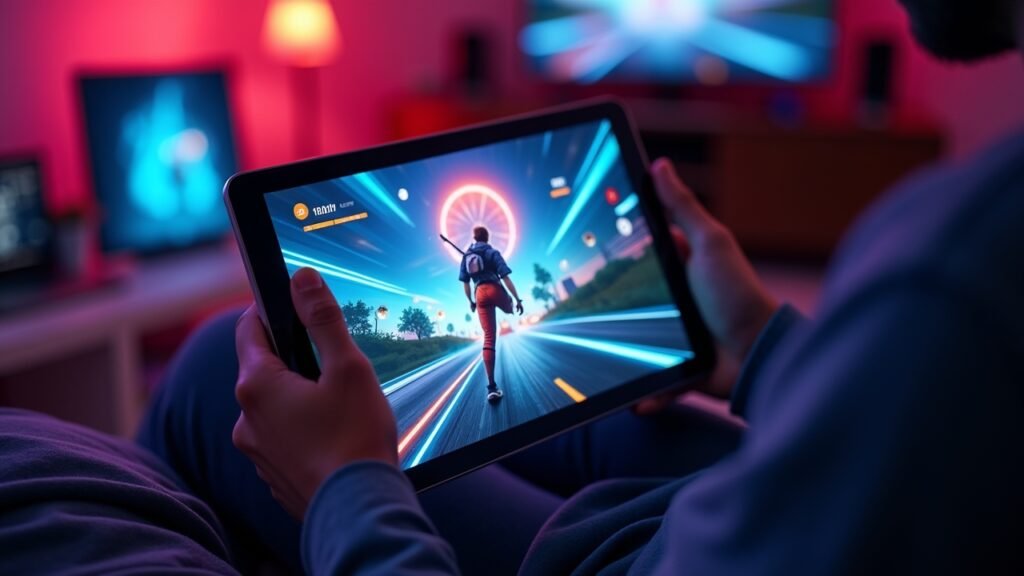
This is where cloud gaming really shines, folks. You don’t need a $2,000 gaming PC anymore. I’ve literally played Cyberpunk 2077 on my old 2018 laptop that can barely run PowerPoint without overheating. The game runs in someone else’s data center, and you’re just streaming the video to your screen.
Here’s what you actually need:
- A decent internet connection (at least 25 Mbps for 1080p gaming)
- Any device with a screen – laptop, tablet, phone, even some smart TVs
- A subscription to a cloud gaming service
- A controller (optional but recommended)
The Challenges Nobody Talks About
Look, I’m not gonna sugarcoat it. Cloud gaming still has some real issues that need fixing. Internet reliability is probably the biggest one – if your connection drops even for a second, your game freezes. I learned this the hard way during a crucial boss fight that I’d been attempting for like an hour.
Data caps are another nightmare. Some internet providers still have monthly data limits, and streaming games in 4K can eat through that pretty quickly. I went over my cap once and had to explain to my wife why our internet bill was $50 higher that month. Not my proudest moment.
The Input Lag Situation

Even though input lag has gotten way better, it’s still noticeable in certain types of games. Fighting games and competitive shooters? Yeah, you’re probably gonna feel it. Single-player RPGs and strategy games? You’re golden. I’ve found that games like turn-based strategy titles work perfectly on cloud platforms.
Where This Tech Is Actually Heading
The big players are investing billions into this space. Microsoft, Amazon, Sony – they’re all building massive server farms specifically for game streaming. And get this: some companies are experimenting with AI upscaling that happens in real-time during streaming, which could make games look even better than running them locally on mid-range hardware.
Cross-platform play is becoming standard too. I can start a game on my laptop during lunch, continue on my phone during my commute (as a passenger, obviously), and finish on my TV at home. That kind of flexibility was literally science fiction just a few years back.
My Practical Tips for Getting Started
If you’re thinking about diving into cloud gaming, here’s what I wish someone had told me from the start. First, test your internet speed during peak hours – not just once, but multiple times throughout the week. Your connection might be great at 2 PM on a Tuesday but terrible at 8 PM on a Friday when everyone’s streaming Netflix.
Second, use ethernet when possible. WiFi is convenient, sure, but a wired connection makes a huge difference in consistency. I know it’s not always practical, but when it is, do it.
The Bottom Line on Gaming’s Cloud Revolution
So here’s where we’re at – cloud gaming isn’t perfect yet, but it’s getting there fast. The technology improvements I’ve seen in just the past couple years have been remarkable. We’re moving toward a future where the hardware you own matters less and less, and access to games becomes more democratic.
Will cloud gaming completely replace traditional gaming? Probably not anytime soon. But will it become a major way people play games? Absolutely. I’m already using it for about half my gaming time, and that number keeps going up.
The key is understanding what cloud gaming does well right now and what it still struggles with. Don’t expect miracles, but do expect a pretty awesome gaming experience that’ll keep getting better. And hey, if you want to learn more about gaming tech and where it’s all heading, check out more articles over at Voltzora – we’re always diving deep into this stuff!