
The Gaming Controllers Evolution: From Simple Joysticks to Haptic Masterpieces
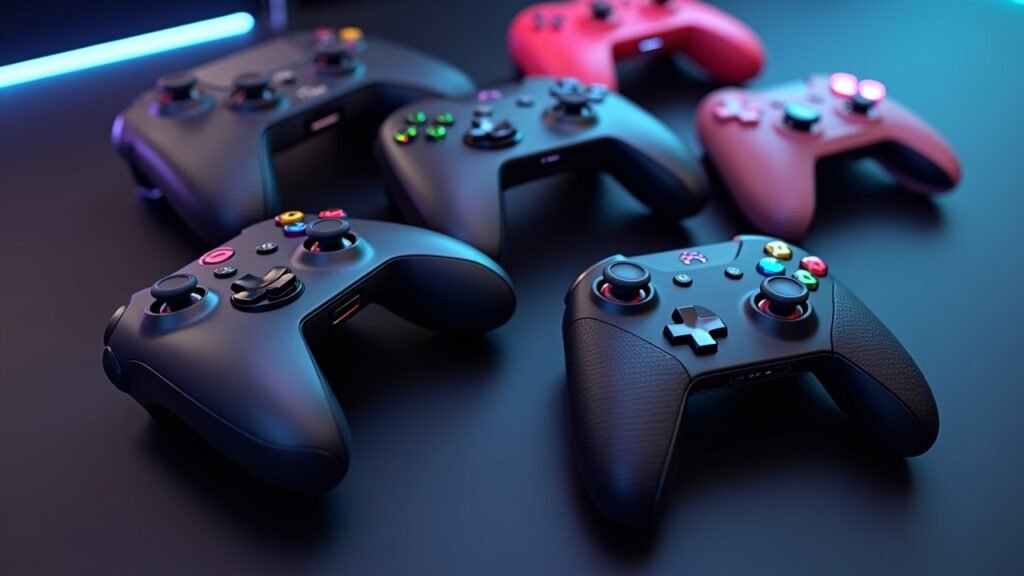
Here’s a wild stat that still blows my mind — the global gaming controller market is expected to surpass $4 billion by 2030. That’s billion with a B! I’ve been gaming since I was about seven years old, mashing buttons on a chunky NES controller at my cousin’s house, and honestly the journey from those early days to now has been nothing short of incredible.
The gaming controllers evolution is one of those topics that hits different when you’ve actually lived through it. Understanding how these devices changed over the decades isn’t just nerdy trivia — it explains why gaming feels the way it does today. So let me walk you through it, decade by decade, with a few embarrassing stories thrown in for good measure.
The Early Days: Atari, NES, and Learning to Hold On
Let’s rewind to the late ’70s and early ’80s. The Atari 2600 joystick was basically a stick and one button. That’s it. I didn’t experience this one firsthand, but my dad had one collecting dust in the garage and I remember thinking it looked like a toy from another planet.
Then Nintendo came along and changed everything with the NES controller in 1985. That rectangular brick of a gamepad introduced the D-pad, which was honestly revolutionary. I used to get blisters on my thumbs playing Super Mario Bros for hours — my mom thought something was seriously wrong with me.
The thing is, those early controllers were designed for simplicity. Games weren’t that complex yet, so you didn’t need much. But man, holding that sharp-edged NES pad for extended sessions was a form of torture nobody talks about enough.
The 3D Revolution: Analog Sticks Change the Game
The mid-’90s is when things got really interesting. The Nintendo 64 controller showed up in 1996 with its weird three-pronged design and, crucially, an analog stick. I remember picking it up for the first time and being completely confused about which handle to grab. Like, why does it have three prongs?
But once you played Super Mario 64 with that analog stick, there was no going back. Moving in full 360-degree directions felt like actual magic. Sony wasn’t far behind either — the DualShock controller arrived in 1997 with dual analog sticks AND rumble feedback, which was a total game-changer for immersion.
I’ll never forget the first time my controller vibrated during a boss fight in Metal Gear Solid. I literally dropped it on the floor because I wasn’t expecting it. My friends still give me grief about that one.
The Modern Era: Wireless Freedom and Haptic Feedback
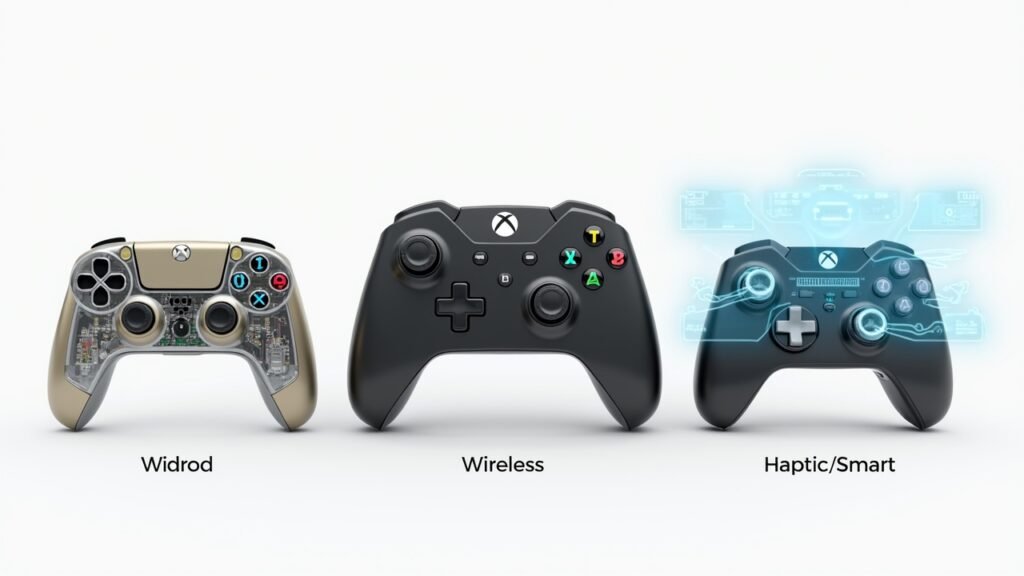
Fast forward to the 2000s and 2010s, and wireless gaming controllers became the standard. The Xbox 360 controller is often been called one of the greatest controller designs ever made, and honestly I agree. The ergonomics were just perfect — it felt like it was molded for human hands by someone who actually played video games.
Then things escalated quickly. Motion controls came with the Nintendo Wii Remote in 2006, and suddenly my grandma was bowling in the living room. Adaptive triggers appeared on the PS5’s DualSense controller, and the Xbox Adaptive Controller made gaming accessible to players with disabilities — which, honestly, might be the most important controller innovation of all.
Nowadays we’ve got haptic feedback so precise you can feel raindrops, gyroscopic aiming, back paddles, and customizable everything. It’s a far cry from one button and a stick.
What’s Next — And Why It Matters
The gaming controllers evolution isn’t just about hardware getting fancier. It’s about how we connect with virtual worlds, and each generation has brought us closer to something that feels truly intuitive. Whether you’re a casual player or a competitive esports enthusiast, the controller in your hand shapes your entire experience.
My advice? Don’t just settle for whatever comes in the box. Try different controllers, experiment with custom configurations, and find what works for your hands and your playstyle. Your thumbs will thank you later.
If you enjoyed this little trip down memory lane, make sure to check out more posts over at Voltzora — we’ve got plenty more deep dives into gaming tech, gadgets, and everything in between!